Table of contents
Overcrowded landmarks, timed-entry tickets, and photo queues have become the new soundtrack of travel, from European capitals to national parks, and many travelers now say they want something else: not necessarily harder, just truer. In that search, “hidden hikes” have moved from niche forums to mainstream itineraries, promising quieter trails, local texture, and a sense of discovery that a checklist can’t deliver. But do lesser-known walks really unlock more authentic destination experiences, or do they simply relocate the crowd?
Hidden hikes, real places: what “authentic” means
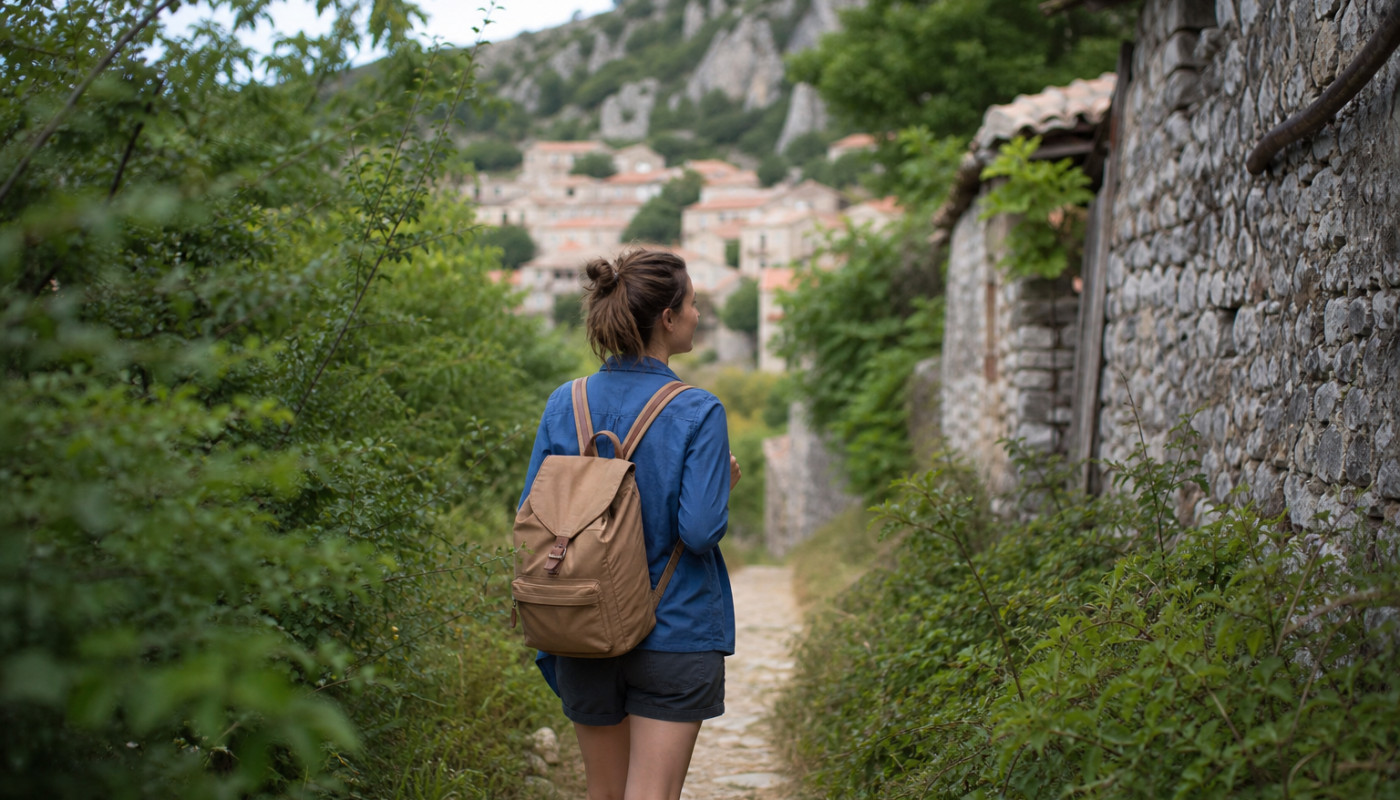
“Authentic” travel is a slippery word, and on the trail it can mean several things at once: fewer people in the frame, more time in nature, and a better chance of meeting residents who are not paid to perform culture on schedule. Tourism researchers often separate “staged authenticity” from “existential authenticity,” the latter describing the feeling travelers report when an experience seems self-directed, unmediated, and personally meaningful rather than designed for consumption. A hidden hike, when it truly is low-traffic and locally rooted, can create that effect because it replaces the choreography of famous viewpoints with smaller, everyday landscapes: a farm track between stone walls, a canal towpath used by commuters, or a ridge where locals run before work.
Data points support why this desire is growing now. The UN World Tourism Organization has repeatedly highlighted the rebound of international travel since the pandemic, with many destinations reporting visitor numbers back near, or above, 2019 levels, while cities such as Venice and Barcelona have introduced or debated stricter crowd-management tools. In the US, the National Park Service has set new annual visitation records in recent years, and several high-demand parks have expanded reservation systems for peak access. When pressure concentrates on a handful of headline sights, the appeal of a quieter route is not just romantic; it is practical, and for some communities it is a relief valve.
Yet hidden does not automatically equal authentic, and in some places “secret” has become a marketing category of its own. A trail can be empty because it is dangerous, because it crosses sensitive habitat, or because it is on private land where access is tolerated only when walkers behave responsibly. Authenticity is also shaped by what hikers bring with them: if the goal is simply to replace one Instagram backdrop with another, the experience may be quieter, but not necessarily deeper. The most consistently “authentic” hidden hikes are often the least spectacular on paper, and that is precisely their point: they reflect how people actually move through a place.
Overtourism’s pressure makes side trails attractive
Who hasn’t arrived at a “must-see” path only to find it feels like a slow-moving line? The shift is visible across regions: classic coastal routes with narrow sections, famous waterfall loops with limited parking, and summit trails where bottlenecks form at ladders and chains. Destinations respond with timed-entry permits, shuttle systems, paid parking, and social media campaigns asking visitors to spread out. For travelers, hidden hikes can look like an escape hatch from that friction, offering the same scenery category, sea cliffs, forest canopies, alpine meadows, without the logistical stress.
The numbers behind crowding often revolve around infrastructure rather than total land area. A region can have hundreds of miles of paths, but only a few trailheads with large lots, transit links, or prominent online reviews, and once those access points saturate, the experience degrades quickly. Meanwhile, other trails remain underused because they require a short bus ride, a confusing junction, or simply a willingness to walk without a famous name. This is why “hidden” is frequently less about geography than about information flows: what guidebooks highlight, what maps apps recommend, and what travel content repeatedly amplifies.
There is also an economic angle. When tourists concentrate around iconic walks, spending clusters in the same cafes, rental shops, and parking areas, and smaller villages a few kilometers away see little benefit. Dispersal can help, but only if done thoughtfully: steering people onto trails without facilities can increase litter and rescue incidents, and sending hikers through residential lanes can generate conflict. The most effective models tend to pair promotion with preparation, including clear signage, waste management, and agreements with landowners. Done well, hidden hikes can be part of a broader strategy to balance visitor pressure, and they can protect the very authenticity travelers seek by preventing a single trail from becoming a conveyor belt.
How to find them without spoiling them
Want the “secret” without breaking it? Start with a mindset shift: you are not hunting for a viral location, you are building a route that fits the destination’s rhythm. Local transport timetables, municipal walking brochures, and regional park websites often list excellent hikes that never trend because they are written for residents, not for algorithms. Community-run visitor centers, particularly outside city centers, can point you toward loops that spread foot traffic, avoid sensitive areas, and match weather conditions; importantly, they may also tell you where not to go, which is the mark of a place managing its landscape responsibly.
Digital tools can help, but they require judgment. Heatmaps and popular-route overlays reveal where crowding is likely, and that makes them useful for avoidance, yet relying on them can also shift pressure onto the next “quiet” line on the screen. A better approach is to use maps to understand terrain, access, and land status, then build redundancy into your plan: two alternative loops, an earlier start, and a willingness to turn around. If you are traveling in the UK and assembling a day around historic streets as much as green space, trip planning resources that bundle walking options with practical logistics can save time, and that is where https://www.york-trip.com can be a handy jumping-off point for organizing a stay and spotting routes that don’t begin at the most obvious choke points.
Finally, protect what you find. Avoid posting precise GPS pins for fragile sites, especially in small ecosystems or on narrow paths that cannot absorb sudden traffic. Stick to marked routes where required, close gates, respect seasonal closures, and treat “quiet” as a privilege rather than an entitlement. In many destinations, a hidden hike remains viable because locals have chosen to tolerate access; one bad season of litter, noise, or trespassing can end that arrangement quickly. The irony of secret trails is simple: the best way to keep them special is to behave as if they were already popular.
The risks: safety, access rights, and local life
A quieter trail can also mean fewer safety nets, and that is not a metaphor. Emergency response times are typically longer away from major trailheads, mobile coverage can be patchy, and signage may be minimal, particularly on older rights-of-way or multi-use tracks. Search and rescue teams in many countries report that incidents often involve visitors underestimating terrain, weather, or daylight, and hidden hikes can amplify that risk because there are fewer passersby to assist. The solution is not to avoid them, but to treat them like real hikes: check forecasts, carry layers and water, download offline maps, and tell someone your plan.
Access is another flashpoint. “Hidden” sometimes means unofficial, and unofficial sometimes means illegal: crossing private land without permission, ignoring closures, or using social paths that erode hillsides. In the UK, public rights-of-way are extensive, but they are not universal, and routes can cut through farmland where dogs, gates, and livestock rules matter. In parts of Europe and North America, land ownership patterns can make seemingly harmless shortcuts a trespass issue, and conflicts escalate when visitors arrive in numbers, park badly, or treat working landscapes as theme parks. Authentic travel, in this context, looks like humility: learning the local rules and accepting that not every beautiful line on a map is yours to walk.
Then there is the effect on daily life. When a hidden hike runs through a residential neighborhood, the influx of strangers can strain parking, noise levels, and privacy, even if hikers mean well. Some communities have responded with permit systems, limited parking, or “no influencer” signage, and the tension is a reminder that authenticity is not a product; it is someone’s home. If you want a destination to feel real, you have to let it function as a real place, with real constraints. The best hidden hikes are often those that keep a respectful distance from the most sensitive areas of local life while still connecting you to the landscape that shapes it.
Plan your next walk like a local
Book early in peak months, and build a backup route for weather; you will waste less time and walk better. Set a realistic budget for transport, maps, and a guided option if conditions demand it. Check local schemes, too: some regions subsidize public transport to trailheads, and park shuttles can be cheaper than parking. Authenticity starts with logistics done right.
On the same subject
Why Slow Travel Is Challenging The Way We Plan Our Dream Trips

Unexpected Local Experiences That Redefine Authentic Travel Activities

Exploring The Benefits Of Off-Season Camping In Coastal Regions

The Ultimate Guide To Surfing In Popoyo: What To Expect At A Nicaraguan Surf Lodge
