Table of contents
Overtourism has pushed “authentic” travel to a breaking point, with popular districts in Barcelona and Venice tightening rules on short-term rentals and day-tripping, and travelers increasingly chasing what still feels unfiltered: ordinary places, ordinary people, and the small rituals that rarely make it into guidebooks. The good news is that local life has not vanished, it has simply moved away from the obvious hotspots, and the most memorable activities now tend to be the ones that look almost too simple to plan.
When the best day has no landmark
What if the highlight is a bus ride? Not the scenic, curated kind, but a commuter route at 7:30 a.m., when a city’s real rhythm shows itself in lunchboxes, school uniforms, and half-awake conversations. In destinations where visitors usually ping-pong between monuments, spending a morning “doing nothing spectacular” can be the most revealing choice, and it costs little more than a transit pass.
In practice, this means choosing one everyday corridor and sticking with it, a tram line that locals rely on, a suburban train that links working neighborhoods to the center, or a ferry route used more for commuting than sightseeing. In Istanbul, the Kadıköy ferry on the Asian side can be more instructive than another lap around the historic peninsula; in Lisbon, the trains out to the lesser-visited edges of the metro area reveal how the city actually lives beyond postcards. The method is simple: pick a market stop, ride two or three stations farther than you “should,” get off where cafés outnumber souvenir shops, and let the surroundings set the agenda.
Travel data backs the shift toward the everyday. In its Travel & Tourism Economic Impact 2024 report, the World Travel & Tourism Council estimated the sector would contribute about US$10 trillion to global GDP in 2024, a scale that makes the pressure on famous districts unsurprising. As crowds and prices concentrate, value migrates outward, and so does authenticity, not as a brand promise, but as the natural byproduct of places that have not been redesigned around visitors.
To make this work without romanticizing other people’s routines, set a few guardrails. Start with an early breakfast where office workers eat, not where influencers queue, then walk a “utility route” locals actually take: to a school, a clinic, a municipal building, a hardware street. If you like photography, ask before you shoot, and avoid aiming your lens at children or workers who cannot reasonably refuse. The goal is not to turn daily life into a spectacle, it is to let a destination teach you its quiet logic, and to leave without taking more than you give.
Food you earn, not just buy
Skip the tasting menu, learn the hands. A city can sell you a thousand “traditional” dishes, yet the deepest culinary memories often come from understanding the labor behind them, dough that needs time, spice blends that require patience, and techniques repeated until they become muscle memory. Cooking classes can be touristy, of course, but the right ones do something different: they reframe a meal as a shared task rather than a product.
Look for experiences rooted in a neighborhood economy, not an entertainment circuit, a baker who teaches between production runs, a family-run kitchen that hosts on weekends, a market vendor who turns a morning shop into lunch. The most credible formats tend to be small, often capped at six to ten participants, and they emphasize sourcing: who grows the herbs, why one tomato is chosen over another, how seasonality changes everything. In many Mediterranean destinations, a “fish-to-pan” session that begins at the docks before sunrise will teach you more about local life than any waterfront restaurant with a view.
There is also a sustainability angle that goes beyond buzzwords. The UN Food and Agriculture Organization estimates roughly 14% of food is lost between harvest and retail, and that number rises when demand favors aesthetics and abundance over realistic portions. A hands-on cooking day that plans quantities carefully, uses scraps intelligently, and leans on local produce can be a small but concrete corrective, and it also tends to be cheaper than dining out repeatedly in the most touristed zones.
If you are traveling in Jordan, where hospitality is woven into social life and food traditions vary by region, a well-designed introduction can help you navigate respectfully, from meal etiquette to how markets operate outside the capital. For practical background, including ideas and context that can inform itinerary choices, this informative post is a useful starting point, especially if you want to connect culinary experiences to local communities rather than just check off dishes.
The crafts that still pay the rent
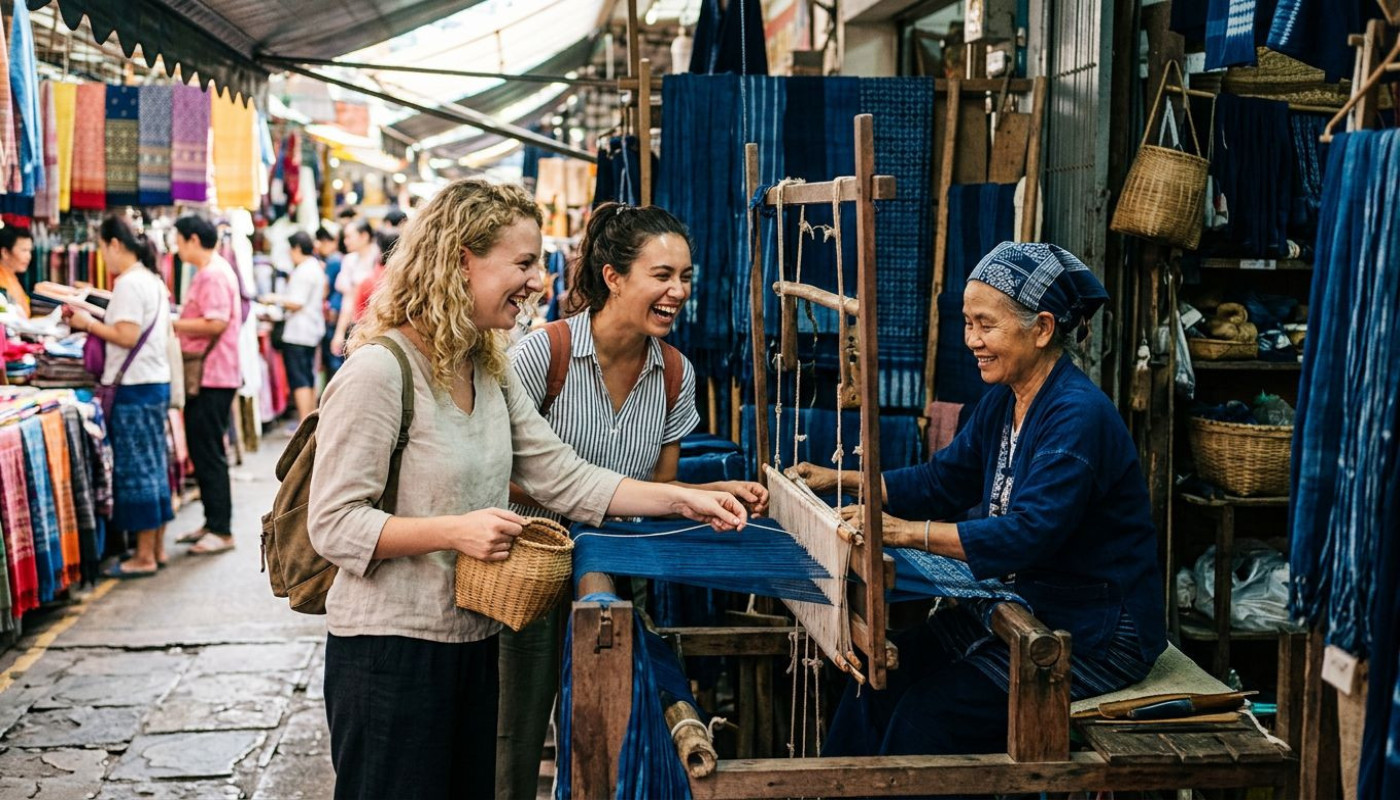
Souvenirs are easy, skills are rarer. In many destinations, craft has been reduced to a performance for visitors, with the same objects repeating across continents, yet there are still workshops where the work is not staged because it cannot be: it is how people make a living. Finding those places, and spending money there, is one of the clearest ways to support a local economy without needing a grand “ethical travel” narrative.
The key is to distinguish between demonstration and production. A glassblower who produces daily orders for restaurants, a weaver who supplies regional cooperatives, a leatherworker repairing belts and bags for neighbors, these are signals you are in the right place. Ask one simple question: “Who buys this when tourists are gone?” If the answer is local households, local businesses, or export clients, you are closer to an authentic chain of value. If the answer is vague, or the shop is surrounded by identical storefronts selling the same trinkets, consider moving on.
These experiences are often inexpensive, but they reward time. Instead of a 20-minute stop, plan a half-day that includes watching, asking, and trying, even if your first attempt is clumsy. Pay for the lesson, do not bargain aggressively, and do not treat the artisan’s workspace like a museum. In many cities, artisans are also under pressure from rising rents and imported knockoffs, so your choices matter. According to UNESCO, traditional craftsmanship is one of the domains of intangible cultural heritage, and safeguarding it is not only about festivals and ceremonies, it is about whether skills can remain economically viable for the next generation.
Some of the most meaningful encounters happen when you commission something small rather than buying what is already on the shelf, a repaired clasp, a resized ring, a simple textile in your preferred colors. You walk away with an object tied to a conversation, and the maker earns income that reflects actual labor, not just foot traffic. If you want a takeaway that travels well, choose items that are functional, easy to pack, and legally uncomplicated, and always ask about materials that may trigger customs restrictions.
Nature moments locals keep to themselves
The secret beach is usually a myth, but the quiet hour is real. Even in heavily visited regions, there are pockets of nature that remain genuinely restorative, not because no one knows them, but because locals time their visits with an instinct tourists have not yet learned. The difference between a packed viewpoint and an empty one can be as simple as arriving on a weekday, or choosing a shoulder-season month, or walking 20 minutes farther than the first parking lot.
Start by borrowing local patterns rather than chasing viral lists. Ask a café owner where they go “after work,” not where they send visitors. Look for small protected areas, municipal forests, river paths, and working landscapes like olive groves or grazing highlands, and then design your outing around light and weather. A dawn walk in summer can be safer and more comfortable than a noon hike, and it is also when birds, fishermen, and joggers appear, a cross-section of local life that makes the scene feel grounded instead of staged.
Responsible access matters more than ever. The European Environment Agency and many national parks have warned about erosion, litter, and habitat disturbance linked to increased recreational pressure, and the rise of geotagging has pushed fragile sites into the spotlight. Keep location sharing restrained, stay on trails, carry out everything you bring in, and treat wildlife as something to observe, not approach. If you hire a guide, ask how they manage group size and impact, and choose operators who can explain their practices clearly.
Finally, remember that authenticity is not always silence, it can also be participation. Joining a local clean-up walk, a community garden morning, or a citizen-science bird count turns “nature” into a shared civic space, and it replaces passive consumption with a small contribution. You may not return home with a dramatic photo, but you will return with a sharper sense of place, and with the satisfying feeling that your presence did not make the destination worse.
Plan it like a reporter, not a tourist
Book early for small-group activities, and prioritize shoulder seasons when prices soften and residents have more time to engage. Set a realistic budget line for experiences that pay local wages, and keep cash for markets and workshops where cards may not work. Check municipal passes and national discounts, and look up youth, student, and family reductions before you arrive.
On the same subject
Are Hidden Hikes The Secret To Authentic Destination Experiences?
Why Slow Travel Is Challenging The Way We Plan Our Dream Trips

Exploring The Benefits Of Off-Season Camping In Coastal Regions

The Ultimate Guide To Surfing In Popoyo: What To Expect At A Nicaraguan Surf Lodge
